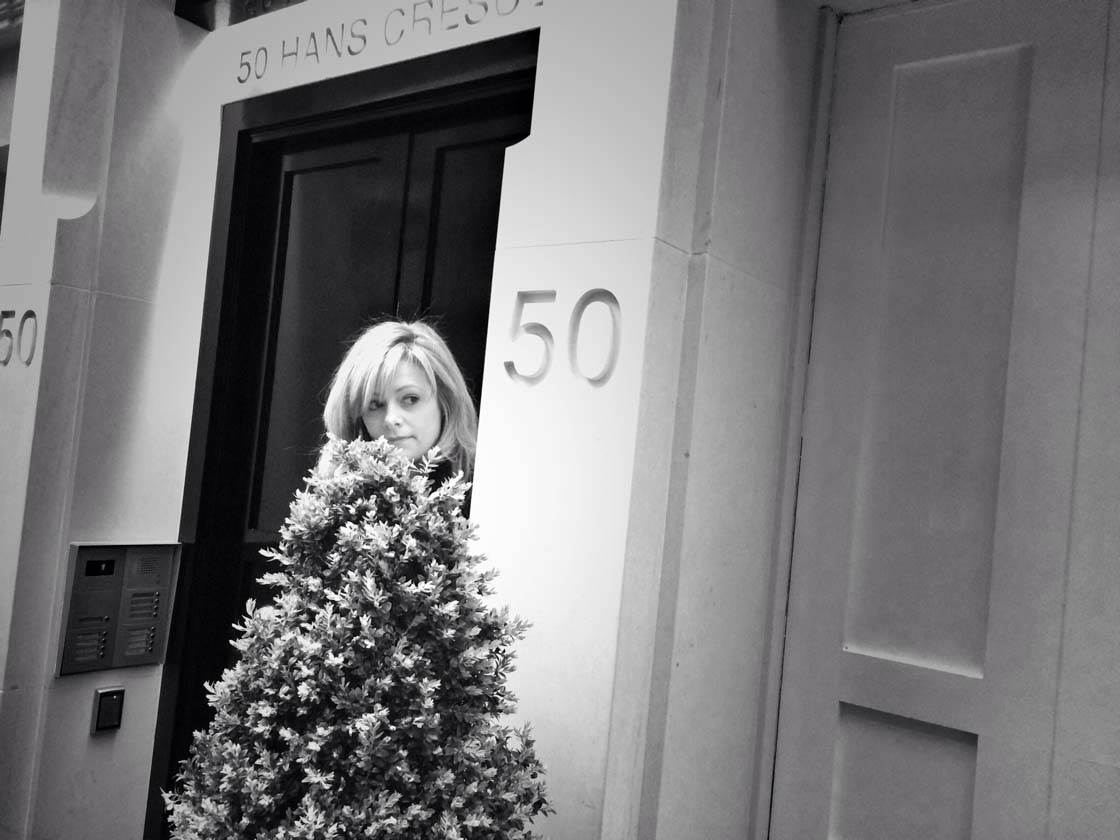
I’m really pleased to share this interview with Rob Pearson-Wright, winner of the mobile photography category in the recently announced Terry O’Neill Photography Awards. Rob has an incredible ability to tell powerful stories with his candid street photography. In this interview you’ll discover more about Rob and how he takes award-winning street photos with his iPhone.
Tell us a little bit about yourself.
I’m from London, England. In my completely biased opinion, it’s the best city in world. I work a 9-5 job as an office manager for my family’s architectural ironmongery business.
How did your iPhone photography journey begin?
At the end of 2010 I treated myself to my first iPhone, an iPhone 4. I put my little Panasonic Lumix in a drawer and never looked back.
For the first couple of years I used the Hipstamatic app almost exclusively, but only really as a replacement for my point and shoot camera.
In the summer of 2012, I signed up for a five-week long iPhone photography course, threw myself into it obsessively, and discovered a real passion for photography in the process.
What inspires you to take photos with the iPhone?
The iPhone gives me a camera that’s always with me, a darkroom that’s always at hand, and a computer that I can use to post and share my photos from almost anywhere in the world.
For the type of photos that I enjoy taking, an iPhone is small and discreet enough to not bring attention to myself, and it lets me get close to my subjects.
Congratulations on winning the mobile category in the prestigious Terry O’Neill Awards 2014! Can you tell us a bit about the series of photographs you submitted, and why you think they caught the attention of the judges?
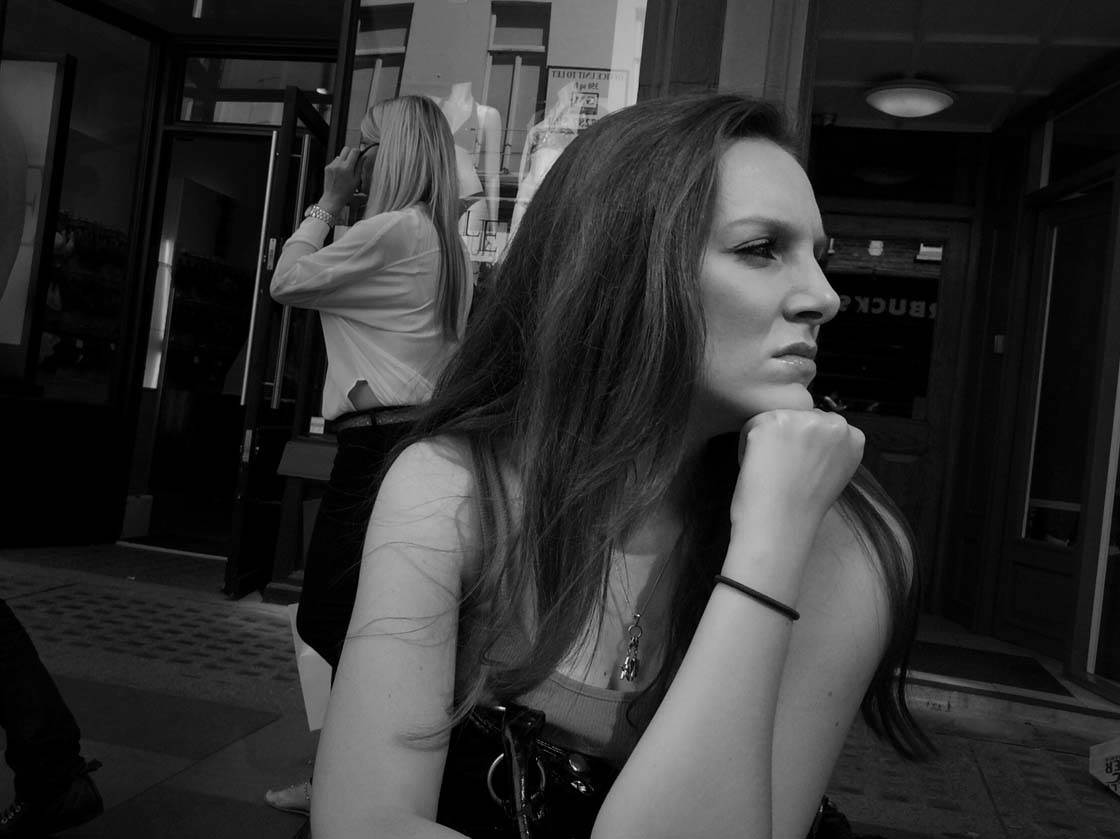
Thank you very much! It’s a great honor for me to have my work featured alongside the work of amazing photojournalists and established photographers.
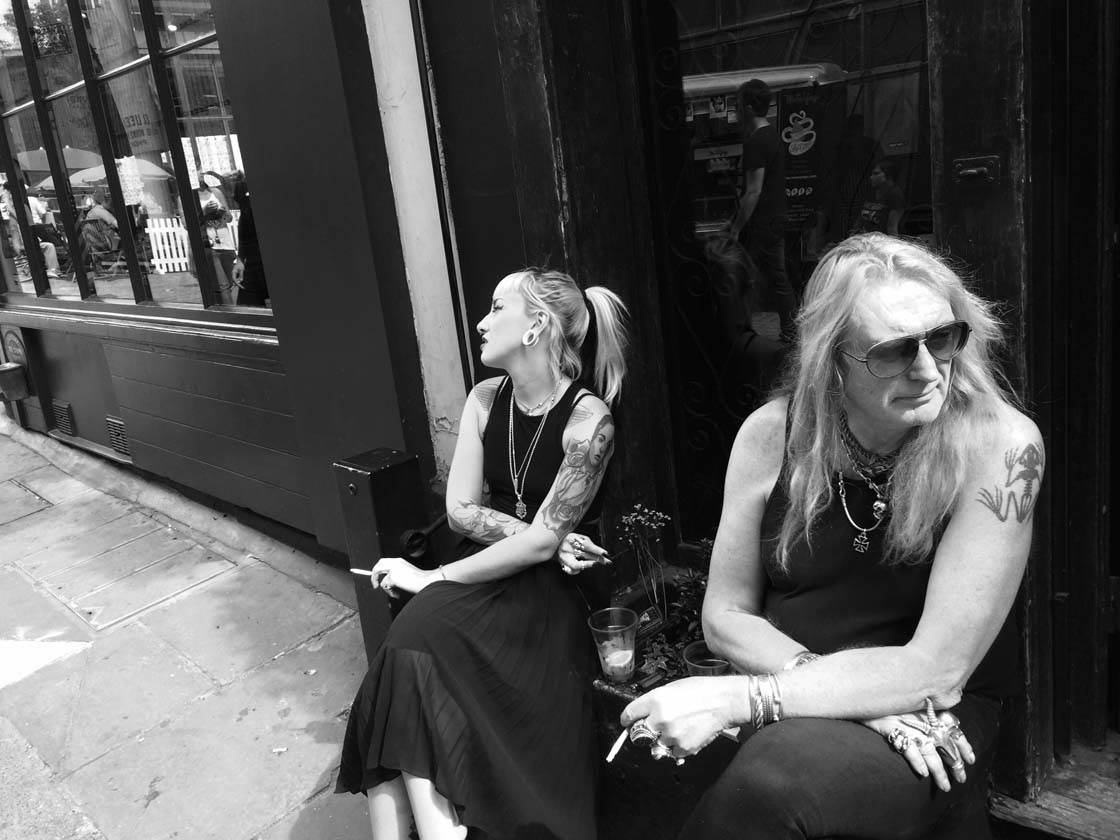
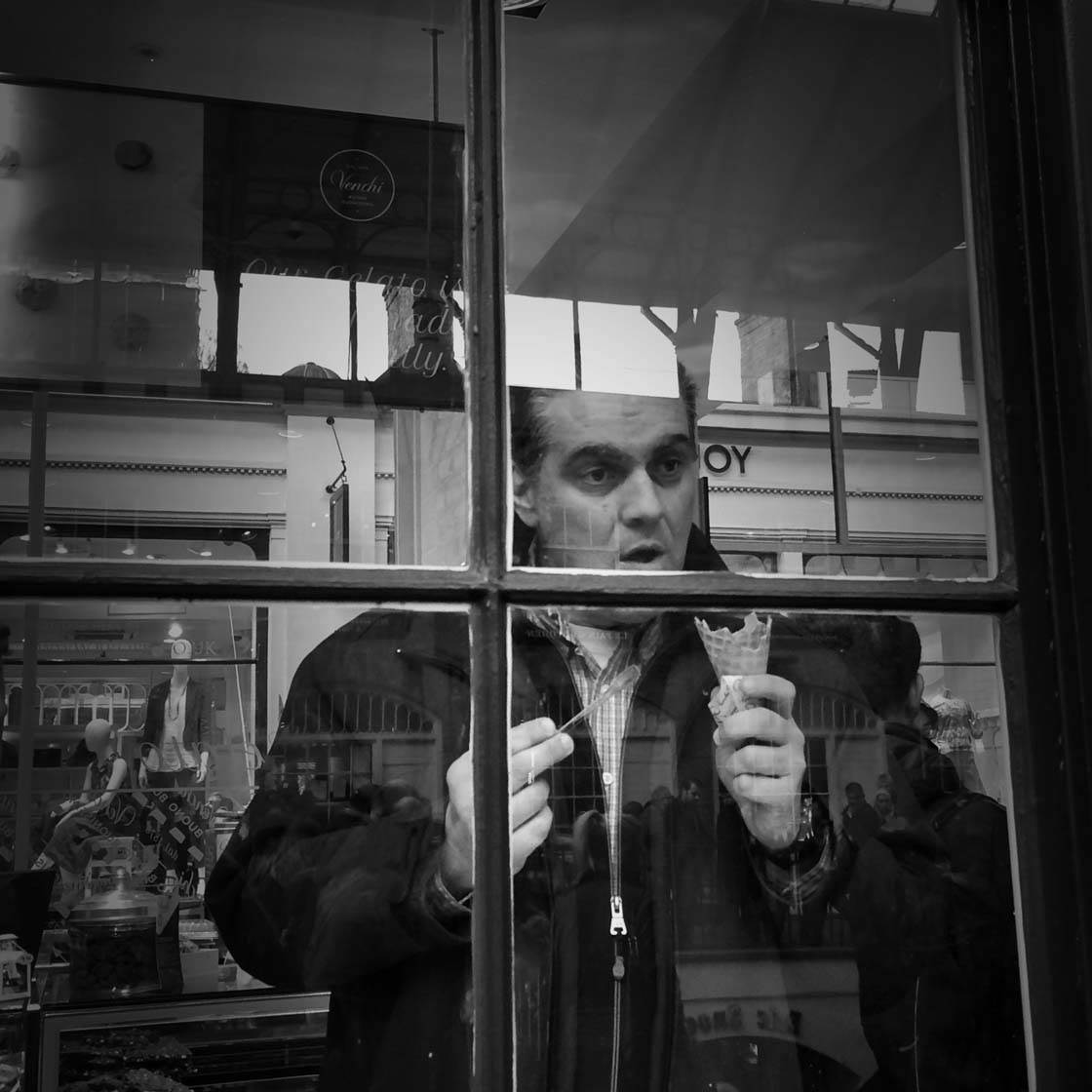
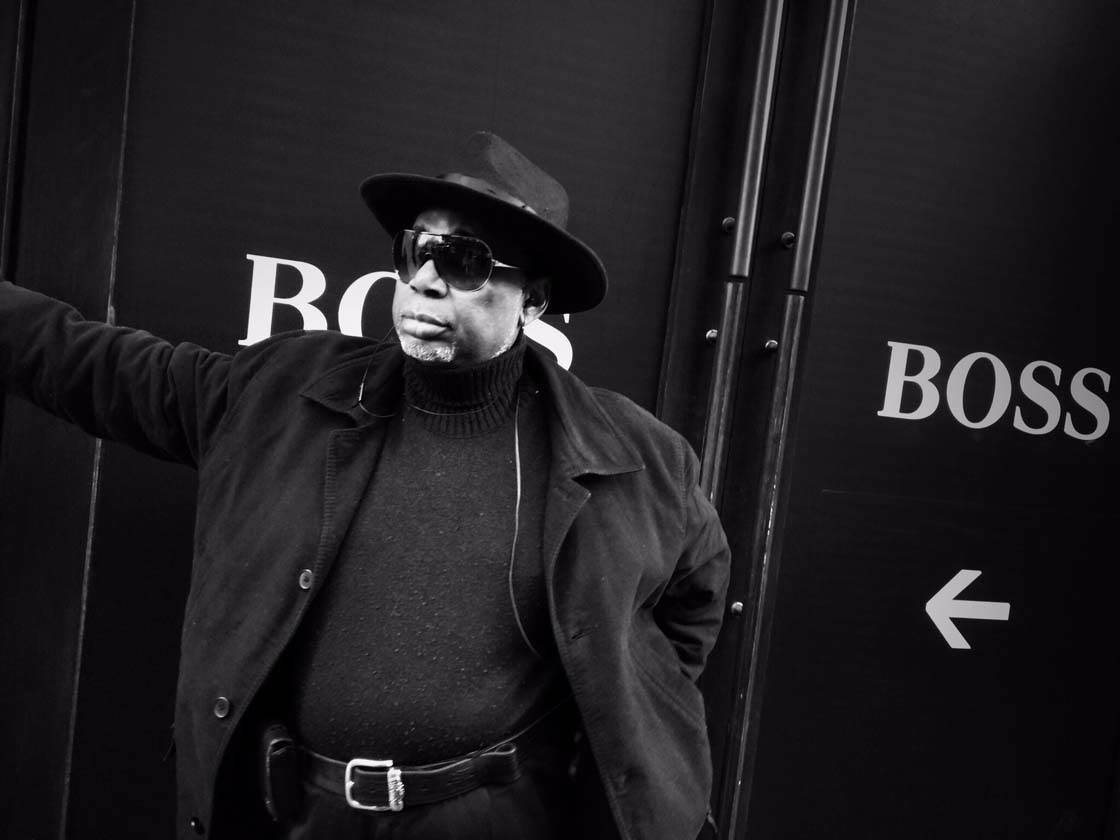
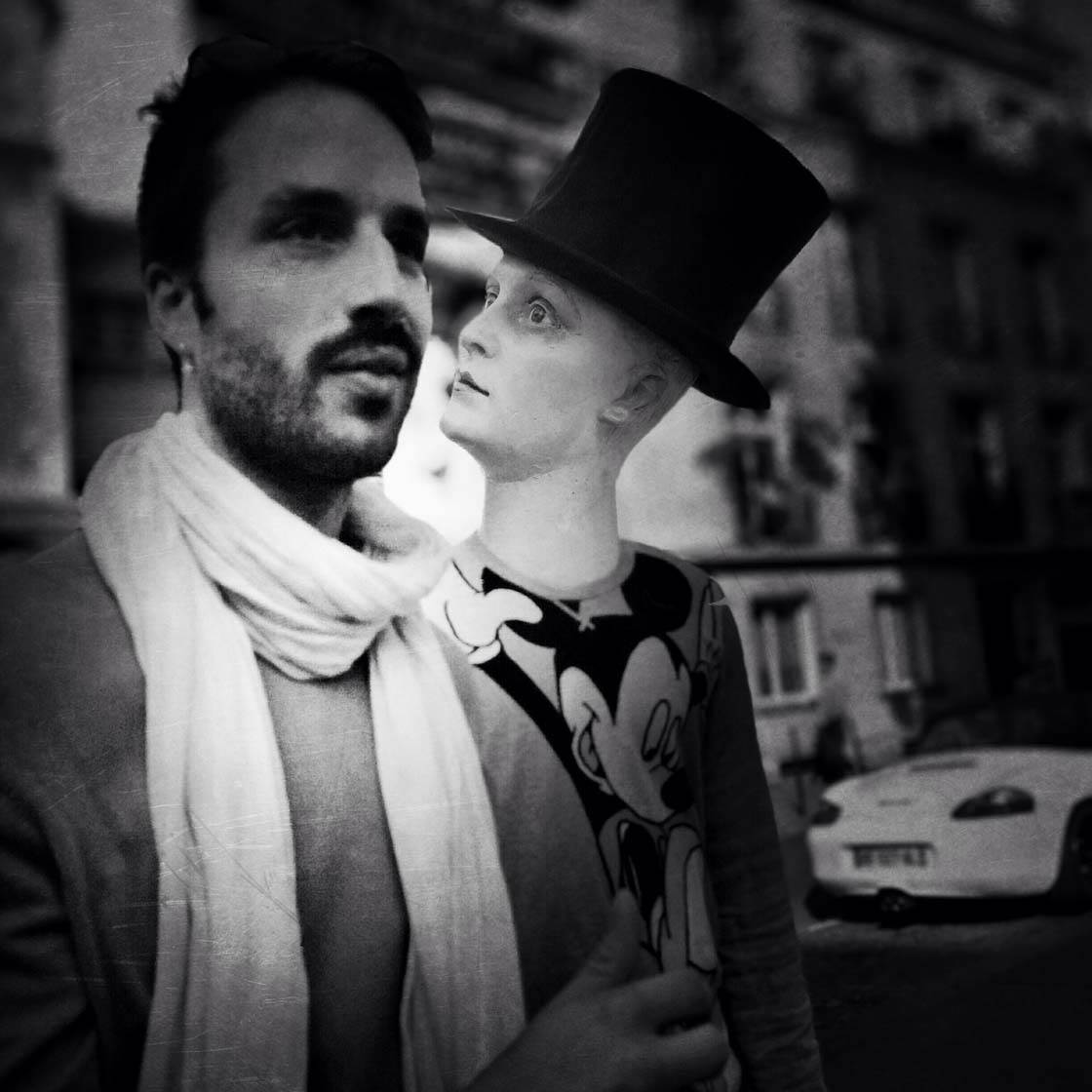
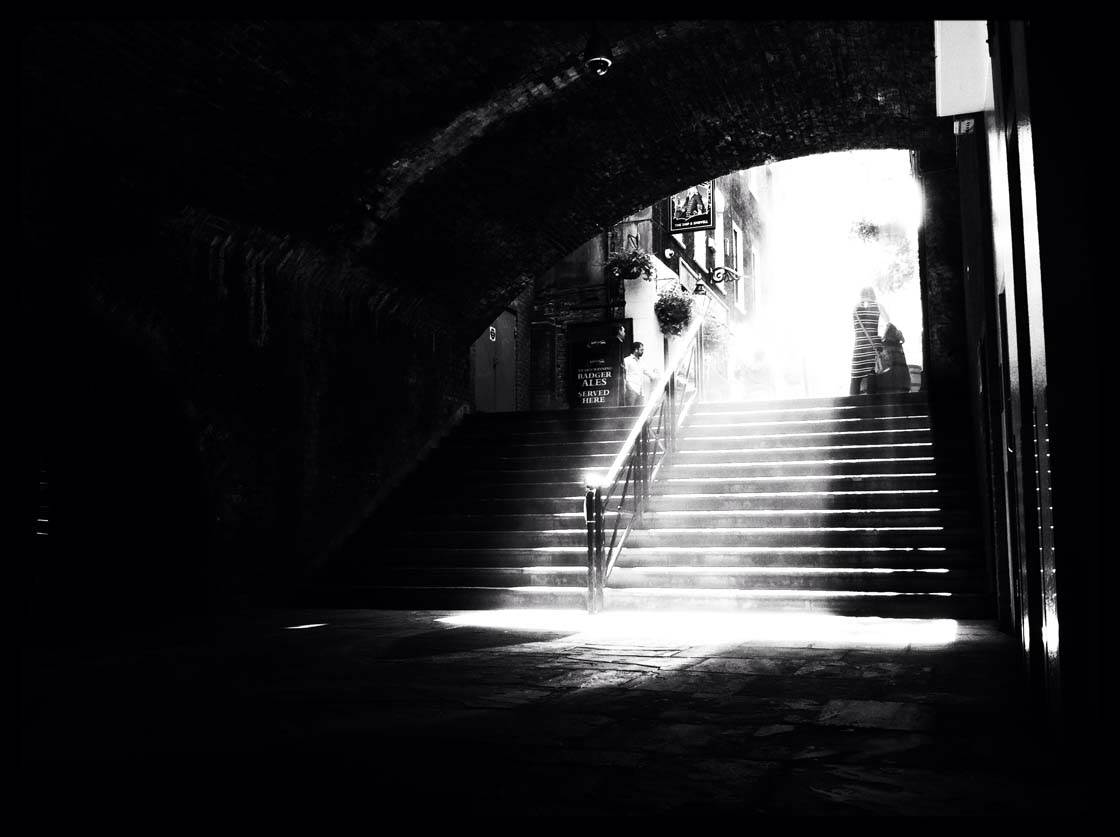
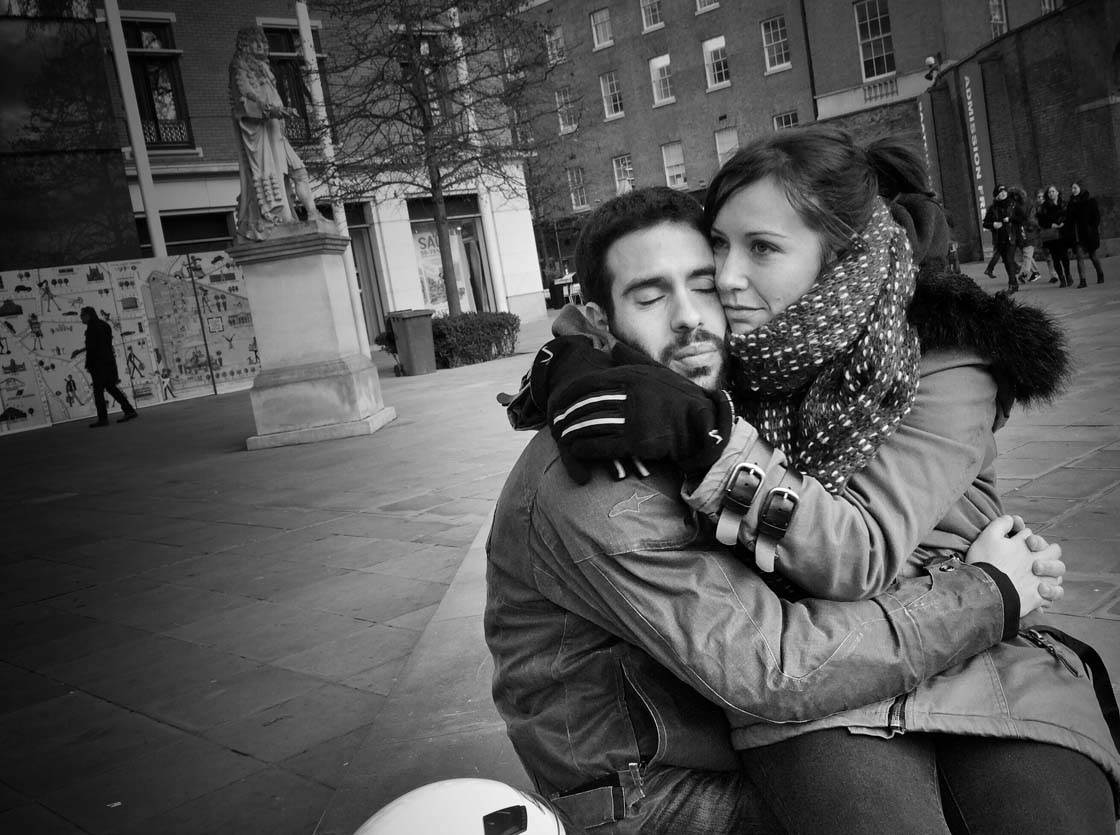
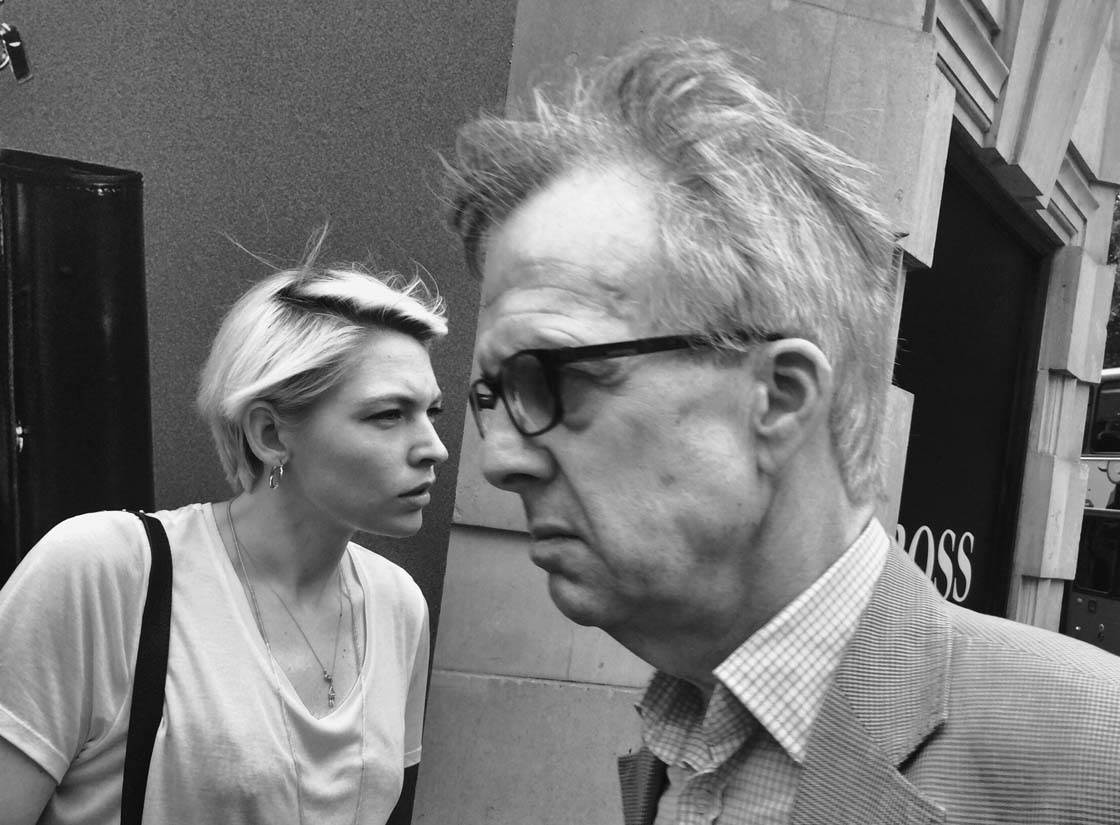
After much poring over my Flickr feed, I found a set of images that had a coherent theme linking them together. I noticed that I’d taken images where you could find a story in the shots because of the gestures, postures and different types of non-verbal communication in them.
As a part of the submission process you had to send an accompanying piece explaining the series entered. This was mine.
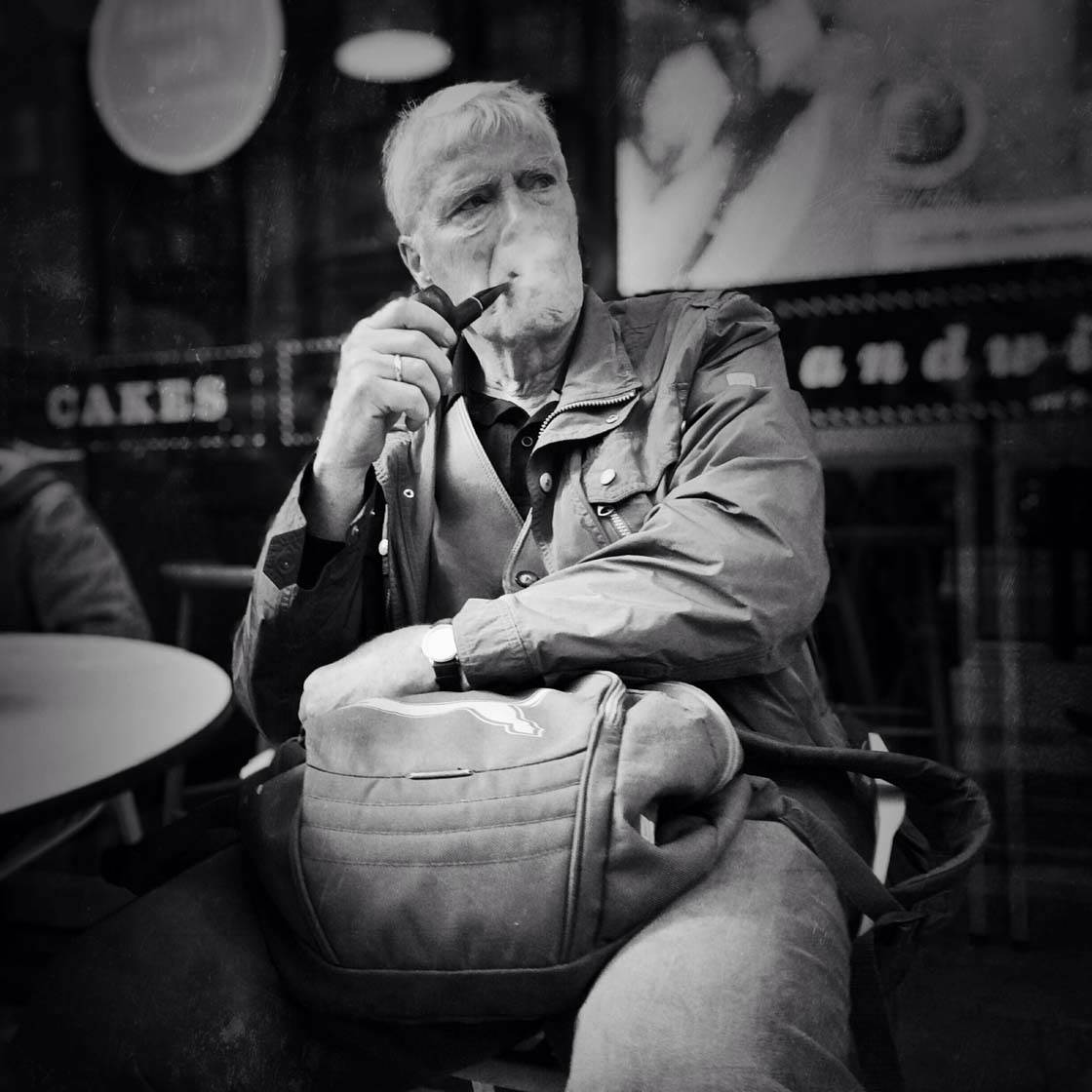
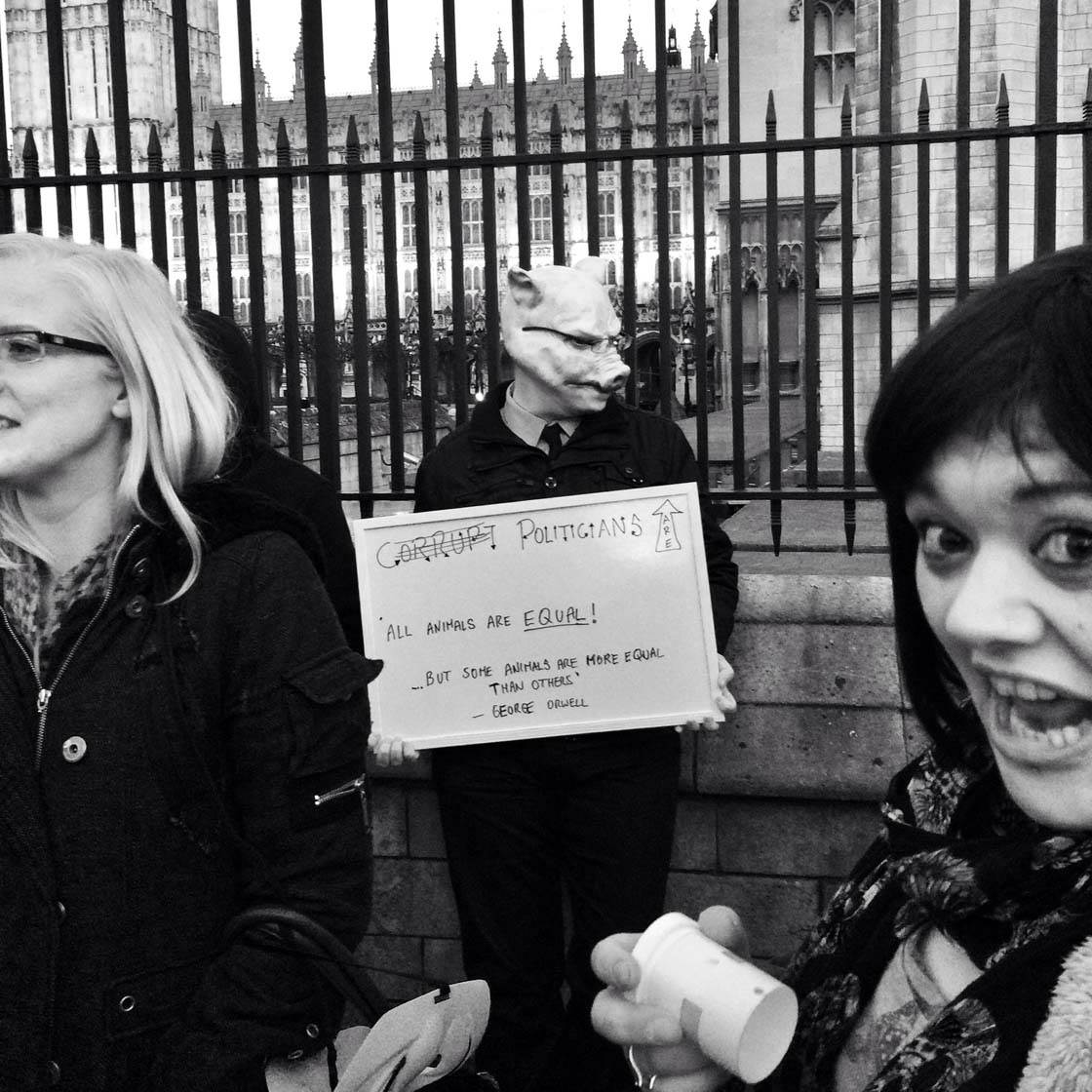
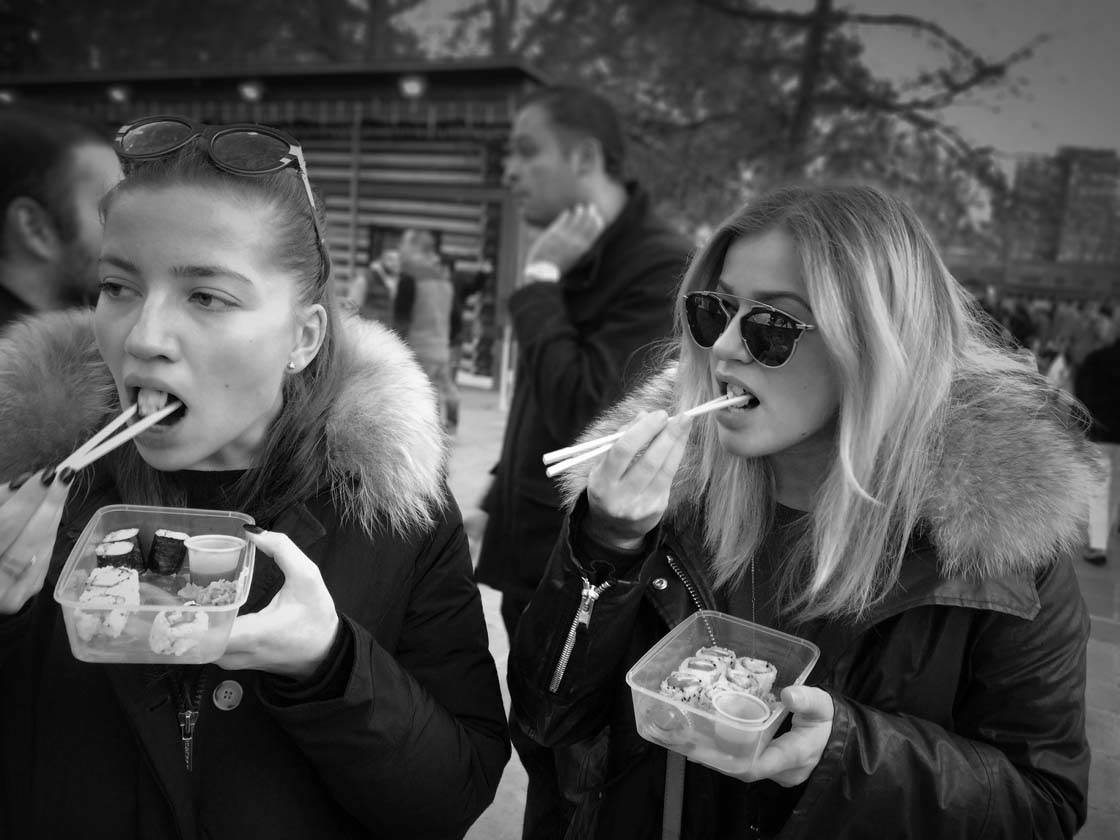
“Universal Language” – Sometimes we say more through our body language or a look than we could through words. Consciously or unconsciously we convey our thoughts or feelings through our outward appearance. Expressions, gestures, posture and use of space, read correctly can be insightful into the current state of a human, or indeed animal mind. Through the understanding of body language we can gauge the clues and interact accordingly. It is possible that most of our social interactions are nonverbal and account for more communication of information than words alone.
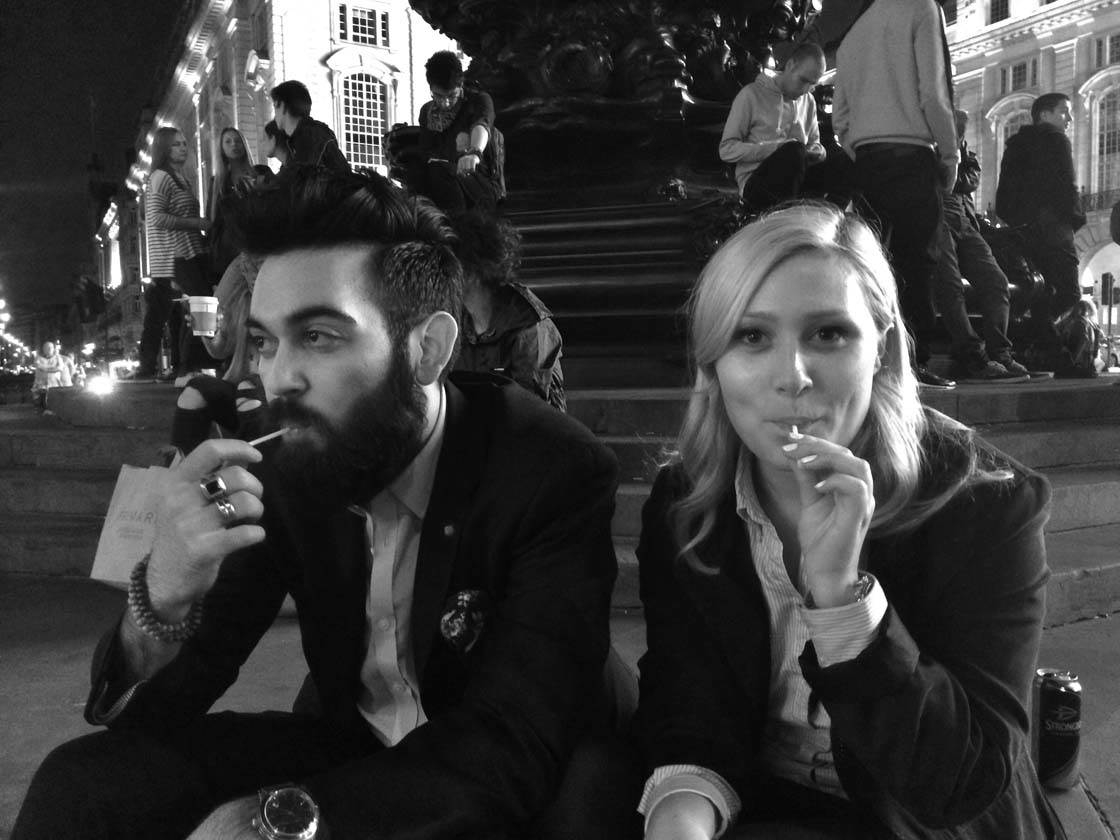
The judges were looking for a consistency of quality throughout the images submitted as a series, as well as working well as a body of work together. I guess that my submission ticked those boxes and appealed to them aesthetically too.
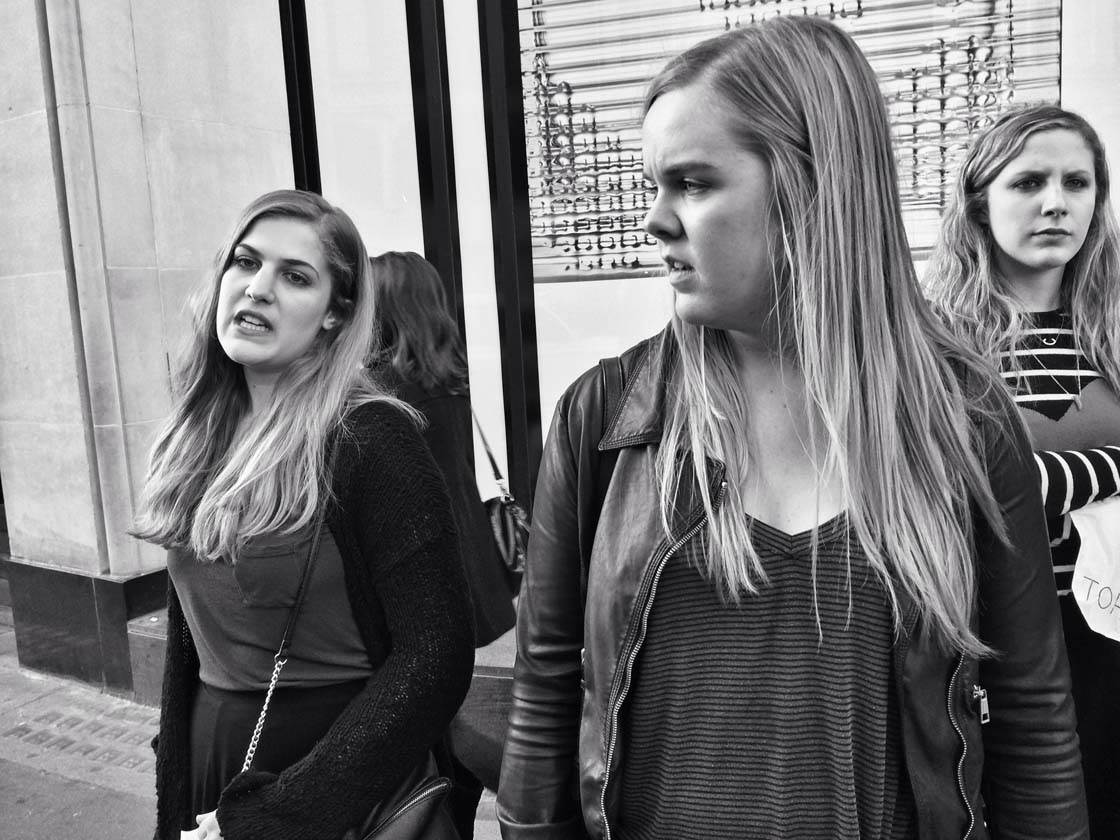
You mainly shoot street photos with your iPhone. What draws you to this genre of photography?
I’m interested in people and the way we all express ourselves, both physically and emotionally.
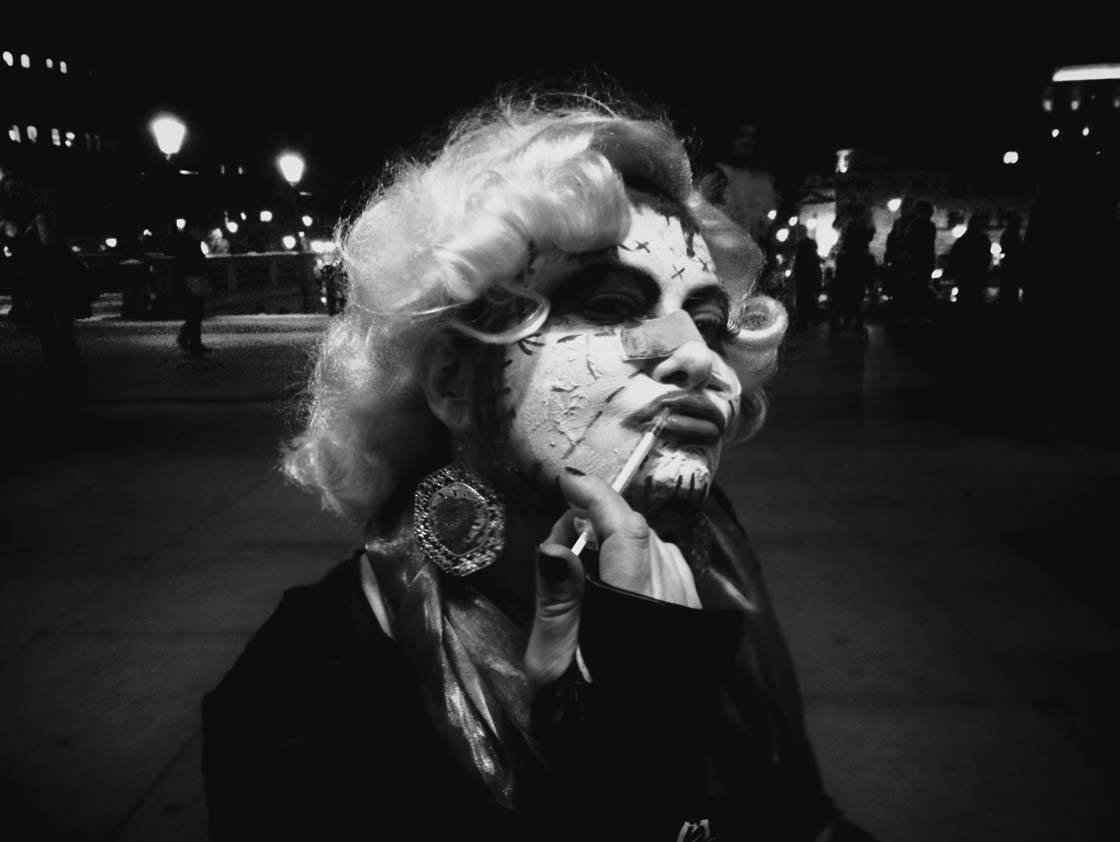
Shooting street photography is a kind of social zoology where I can capture moments that run from the mundane to the absurd – the full range of the human experience.
Street photography is all about storytelling. What tips do you have for telling a powerful story in a photo?
Get close to the action or subject, and zoom with your feet if your story is about characters. Hint at the story behind the image. Leave the viewer with a sense of mystery behind the shot.
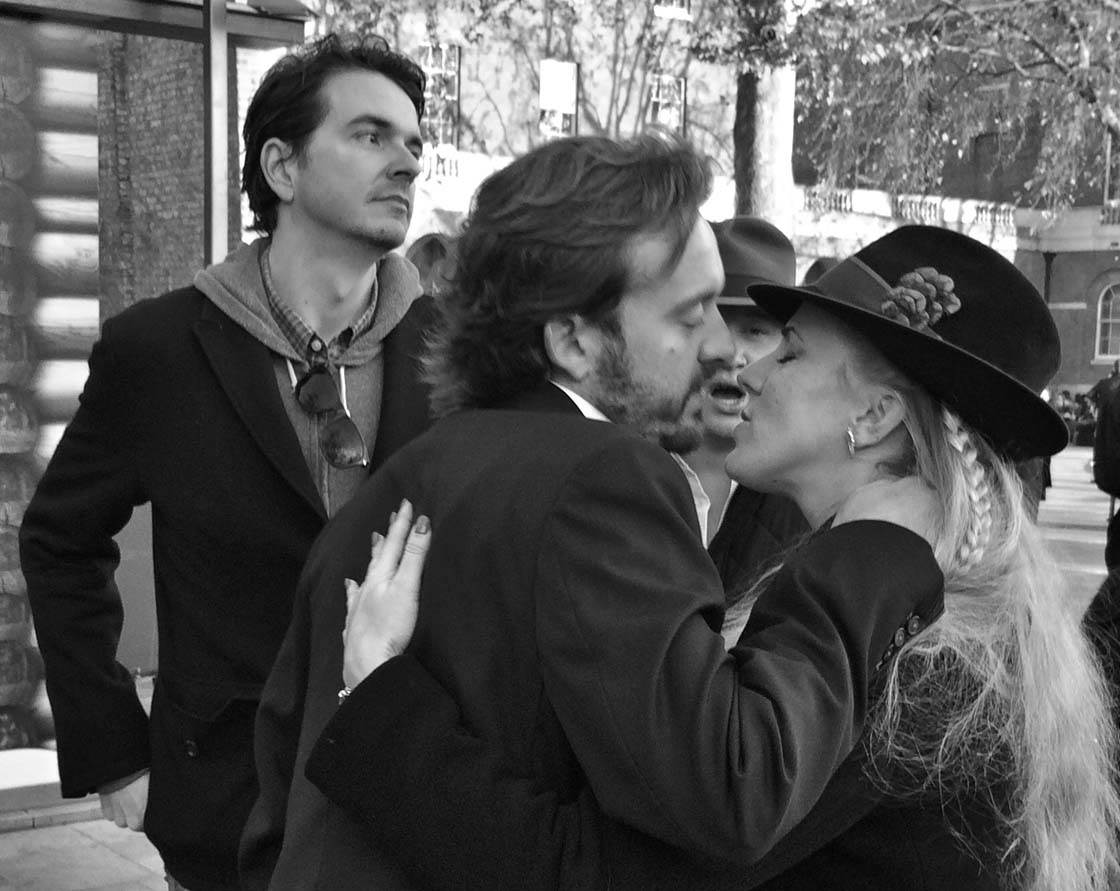
Let them explore the photograph and see what they take away from it. Always view a photo before reading an accompanying caption. You may read differently into the scene than intended or hinted at.
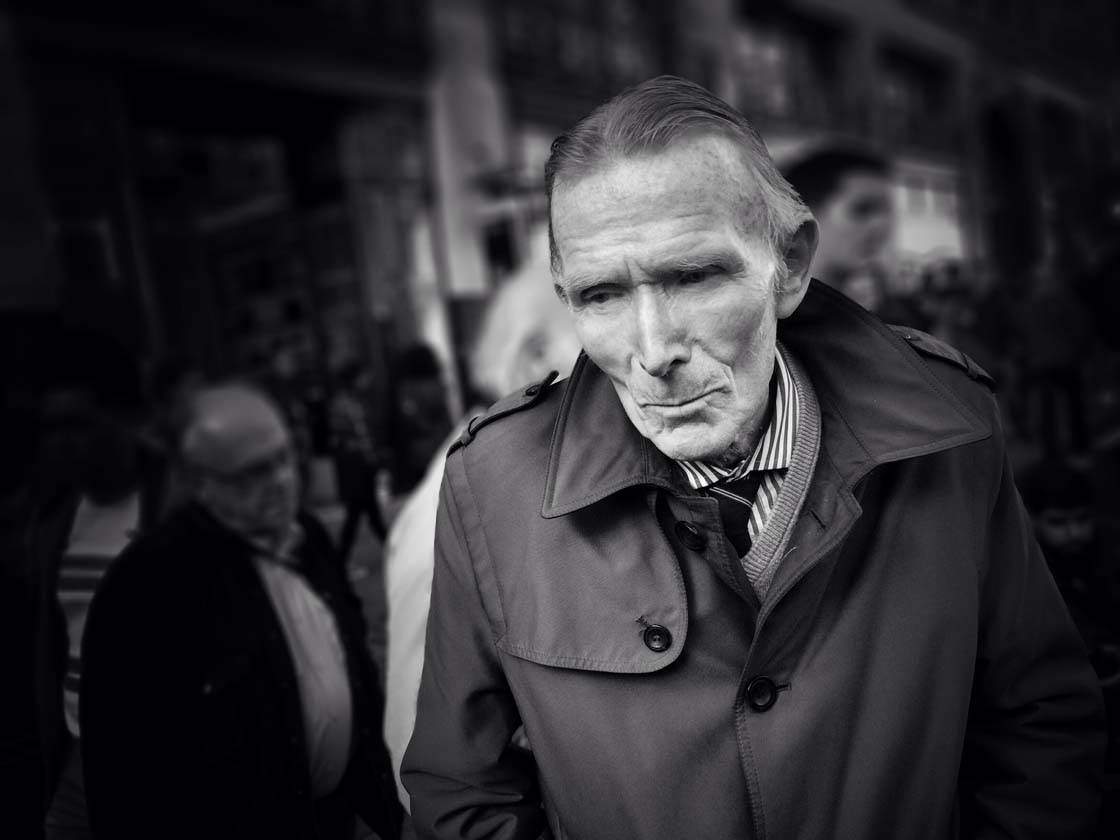
One of the main challenges with street photography is photographing people you don’t know. How do you deal with this, and do you ever encounter problems when photographing strangers?
Once you get over the initial fear of taking photos of strangers, it becomes addictive, almost a challenge to relish. How close can you get? Will they notice? The iPhone is a perfect tool for street photography – small, unobtrusive and ubiquitous.
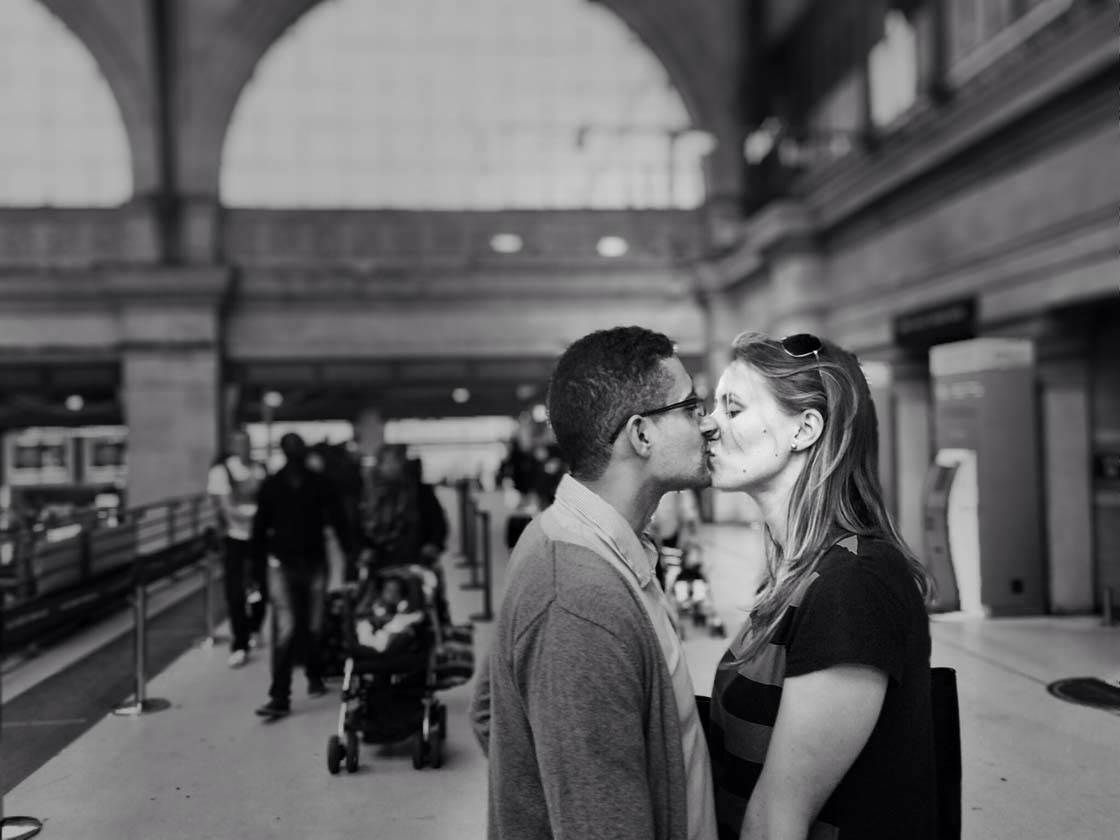
I’ve not yet had a problem with my iPhone shooting on the street. A friendly smile or nod helps if you sense someone is suspicious.
Let’s talk about photo apps. Are there any apps that you use for taking photos besides the native camera app?
Sometimes I’ll use Hipstamatic or ProCamera to take shots. Though I mostly use the native camera app for convenience and speed. I like 645 Pro too but haven’t really had time to explore the app fully.
What are your favorite apps for post-processing?
Snapseed is my immediate go-to app for image editing (check out our Snapseed app tutorial). Apart from being free, it’s extremely intuitive to use and more than adequate for everyday use.
I use Big Lens a lot when I feel like “apping” an image and adding a depth of field effect. Mextures is great for adding texture to an image, as is the ScratchCam app.
I also love Noir Photo for its selective lighting abilities when creating a black and white image. Juxtaposer and Image Blender are great for combining images or elements from different photos together.
Do you use any iPhone photography accessories?
I did enjoy using the Olloclip lenses for macro photography when I had an iPhone 4, but I haven’t upgraded to one for use with my iPhone 5s. I didn’t like the lens aberration that occurred with the wide angle and fish eye lenses. A good iPhone tripod is essential though for portrait work and night shoots.
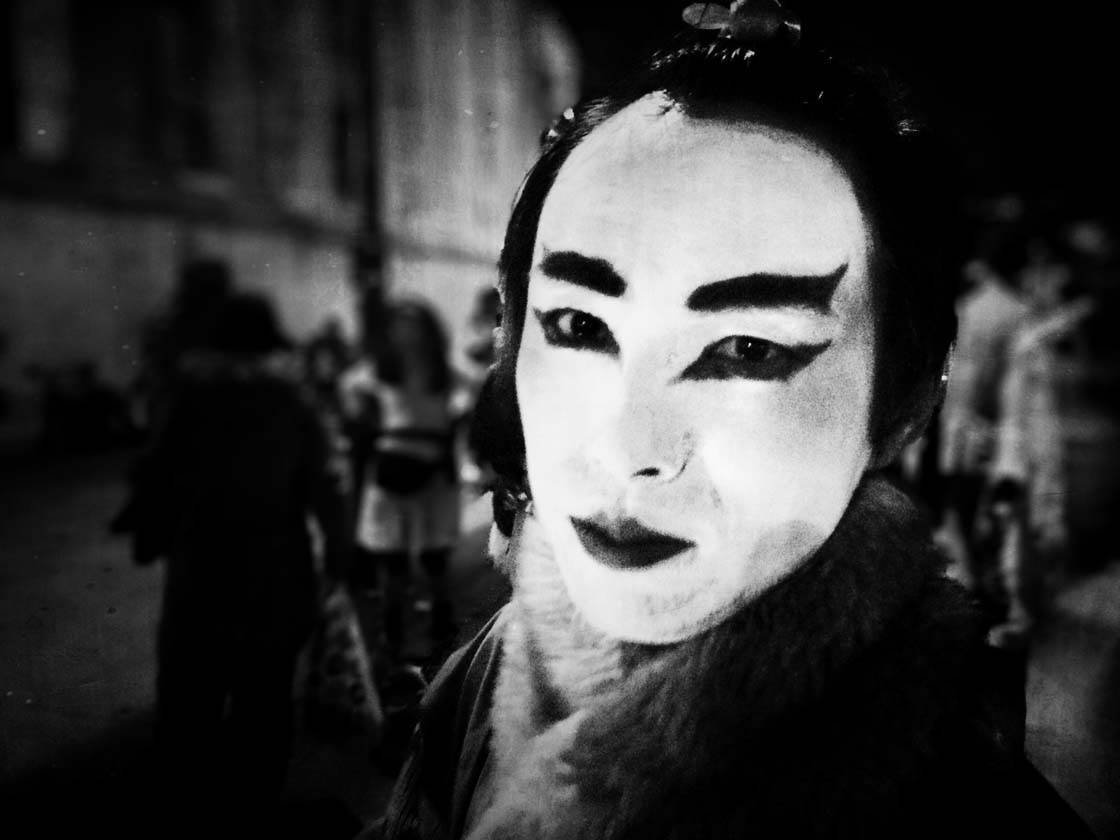
Can you briefly explain the story and editing behind your three favorite iPhone photos?
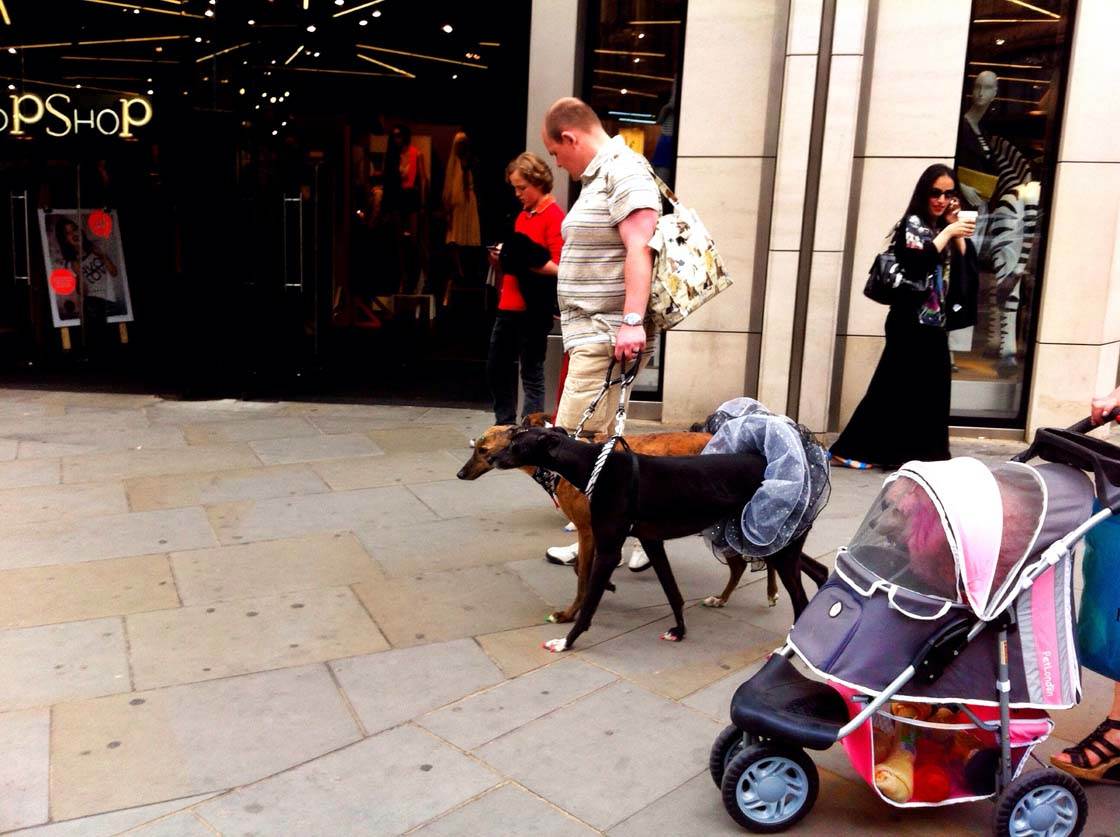
I was heading to the shops to buy some food when I turned around and noticed the two dogs in tutus, which made me laugh, so I grabbed a shot of them.
When I reviewed the image I began to notice more and more elements to the shot, like the nails of the dogs were painted, the details on their heads, the woman doing a double take. And then I noticed what was in the pram.
I edited the shot in Snapseed, boosting the saturation and contrast slightly, and cropped a bit off the left of the image.
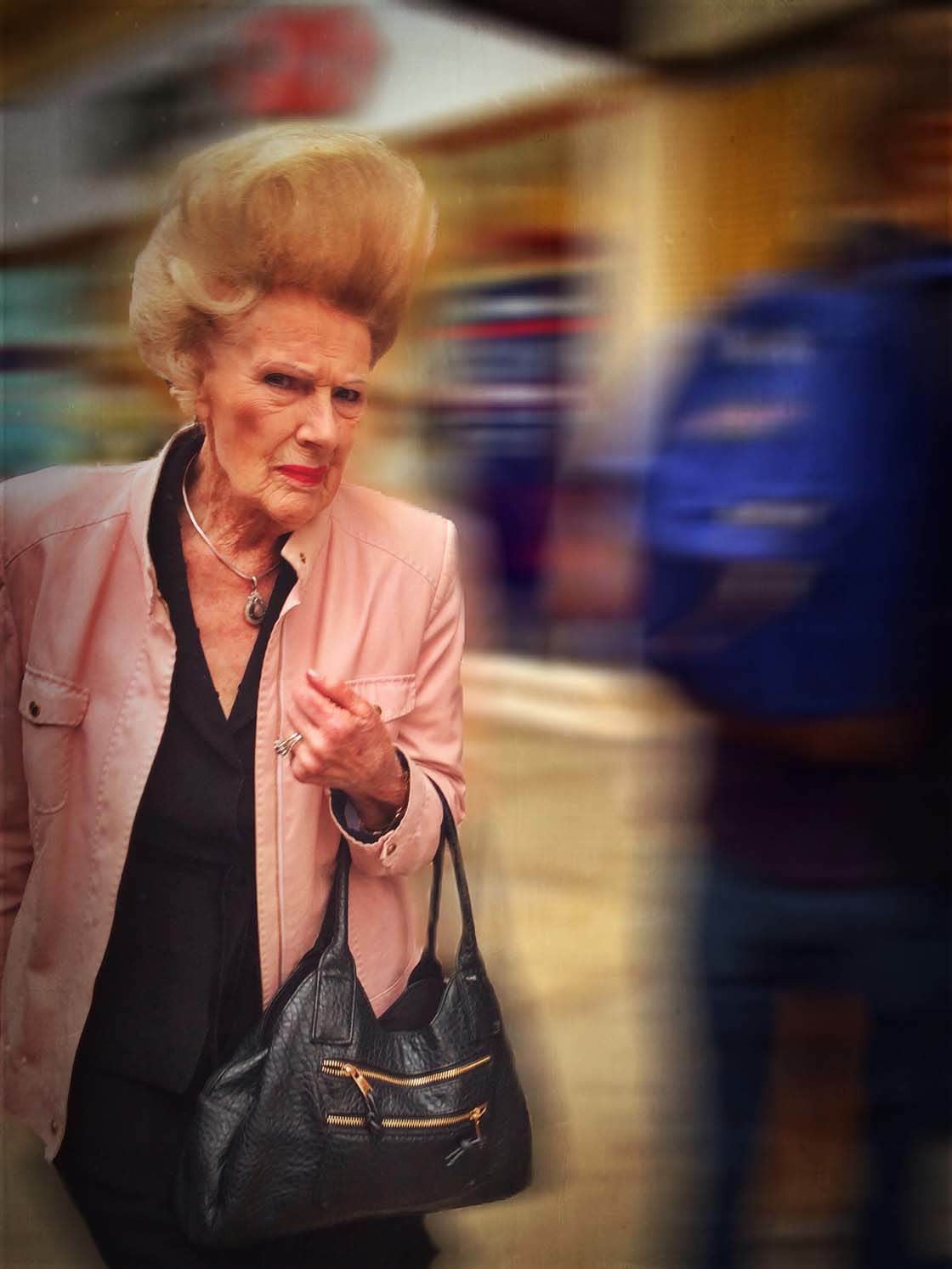
Getting off the bus after work I noticed a local character I’d taken a picture of a couple of years before. She still had the big quaffed hair and air of Margaret Thatcher about her. She must of sensed that I was taking her photo and gave me the evil eye.
After tweaking the saturation and brightness in Snapseed, I used BlurFX to add a motion blur to the background, and then added a little textured effect in Mextures.
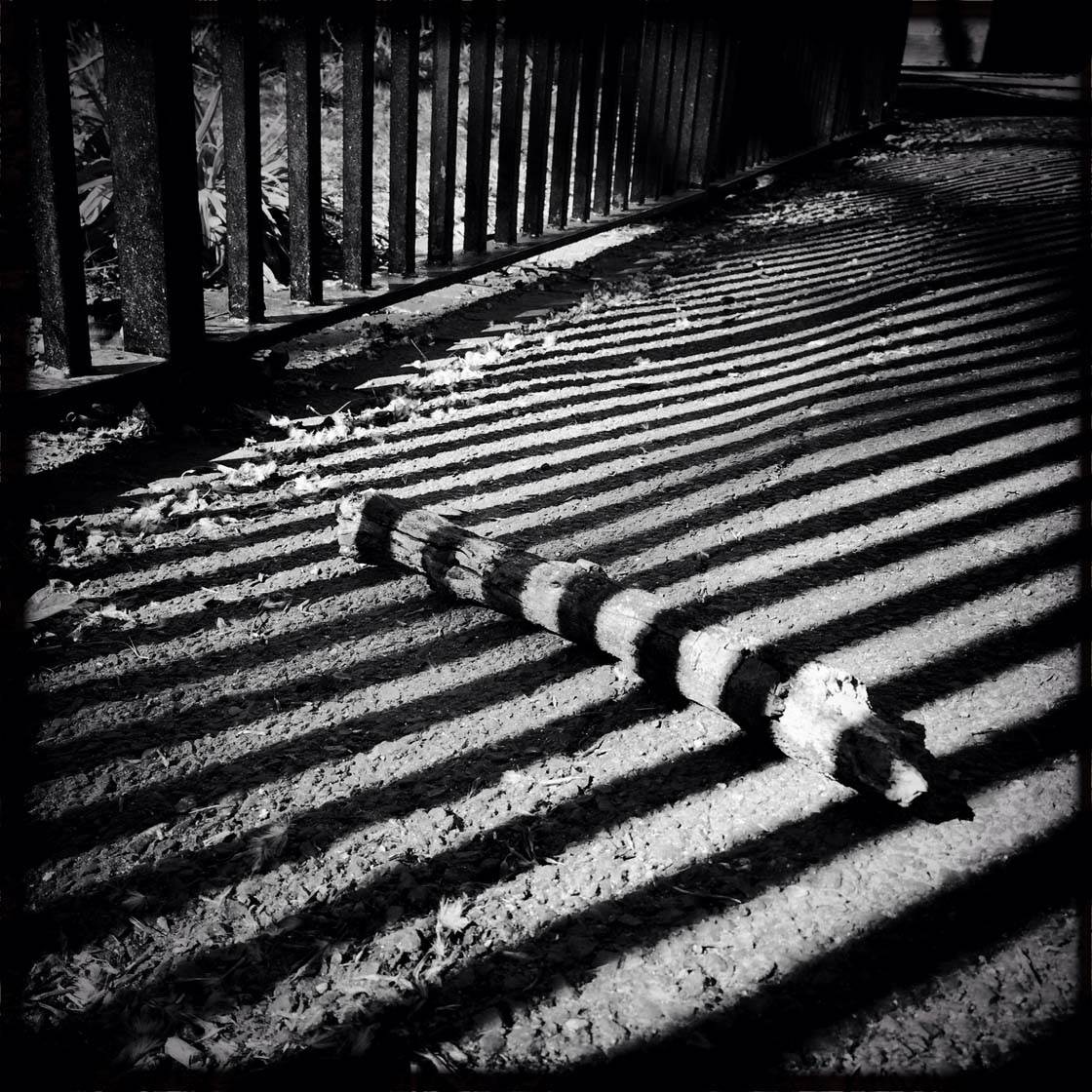
Walking on the way to the park I took a slightly different route than normal. The sun was out for a change and I noticed the pattern of the shadows of the railings hitting the ground. On the path was a broken branch from the tree above and I liked how the shadows diverted slightly over it.
I took the shot with Hipstamatic, using the John S lens and BlacKeys SuperGrain film (check out our tutorial on how to take black and white photos with Hipstamatic). I did no other editing.
Do you use any other cameras, and if so when do you prefer to use the iPhone?
I have a Canon 7d but it’s a whole different kettle of fish for use with street photography than with my iPhone. Firstly when you point a DSLR at someone they’re going to notice. Then even if they don’t notice, there is the massive “clack” sound when the shutter fires.
I find it’s a completely different process shooting with the two cameras. I’m seriously considering jacking in my Canon gear in exchange for something like the Fujifilm X-T1 mirrorless camera, which is silent and fantastic in terms of image quality.
For street work I prefer the iPhone as I can be completely invisible and can get close to my subject.
You’re heavily involved in the mobile photography community. Do you think mobile photography is starting to be taken more seriously in the world of photography?
There are still many people who dismiss mobile photography out of hand as a fad, and say that you need a big and expensive SLR or DSLR camera to be a “serious” photographer.
However, there are, encouragingly, many who say that it’s the picture that counts, and that a good photographer will make a good photo regardless of the camera.
More and more competitions now feature a category for mobile phones and some of them get a lot of international press coverage showcasing people’s work which can still make people say “Wow! That was taken on a phone camera.”
You’re co-organizer of the Click photography group in London. Can you tell us a bit about the group and how it benefits mobile photographers?
Click London is a not-for-profit collective of photographers in London, running workshops, photo-walks and occasional exhibitions. We use Meetup to put on these events and encourage both mobile photographers and DSLR users alike to join in regardless of skill level.
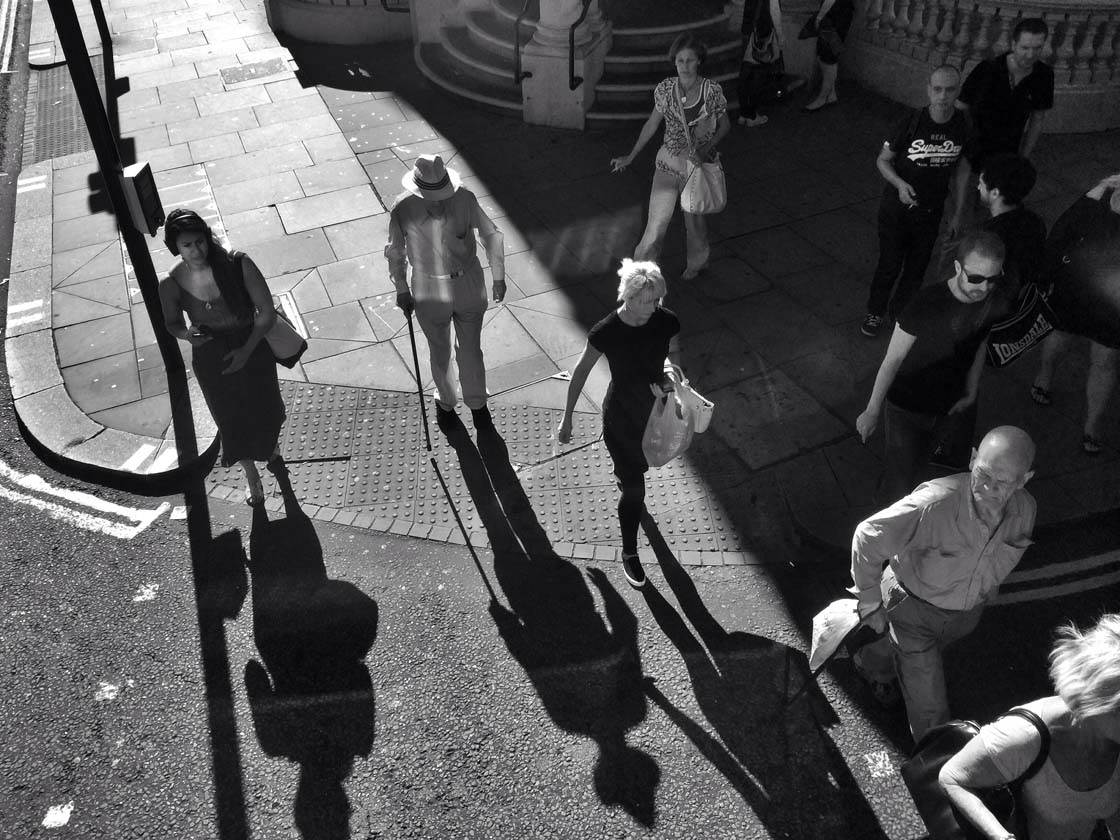
Mobile photographers can share tricks, tips and info about different apps, and socialize and have a drink or two at the end of the day.
Which iPhone photographers do you admire the most?
That’s a long list! Here’s a handful… Kaaren Malcolm @jinx97, Alon Goldsmith @alon_goldsmith, Ryan Vaarsi @ryan_vaarsi, Sacha Dohmen @maktub_street_dog and Robin Robertis @robinrobertis.
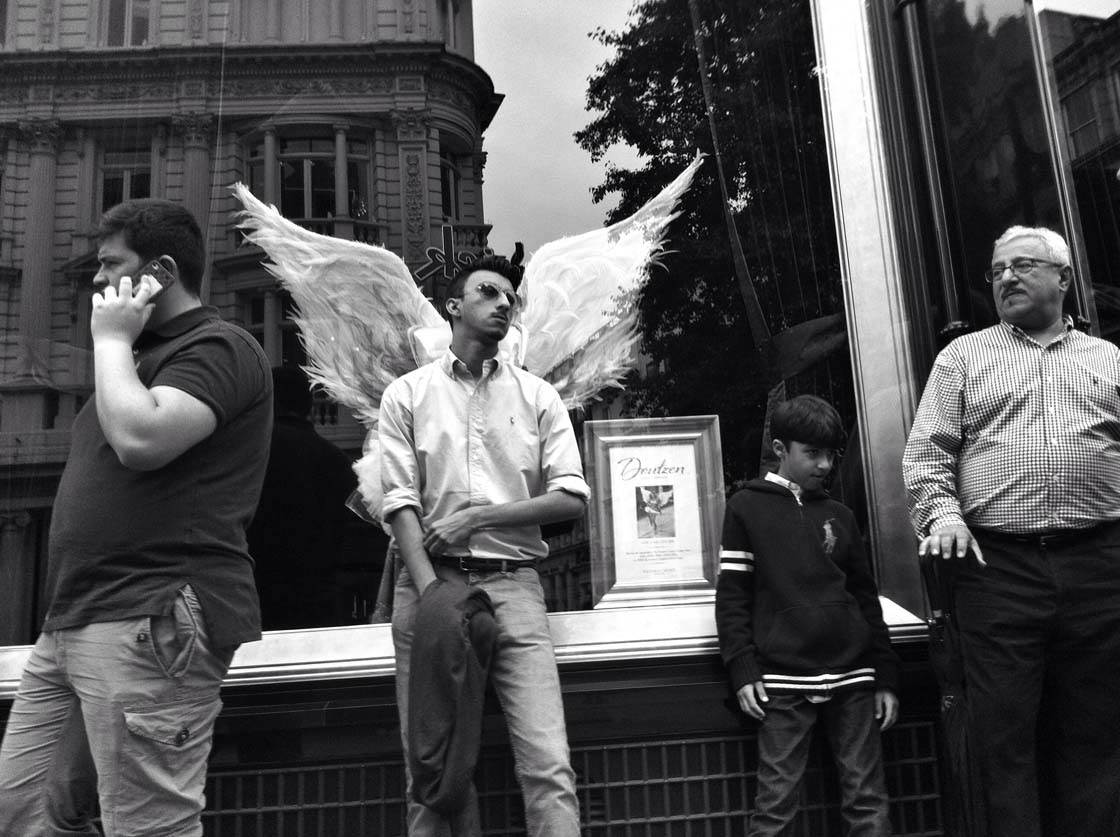
Where can we see your iPhone photography?
You can find my photography on Instagram @brian_beaver, Flicker @brian_beaver and EyeEm @RobPearsonWright. You can also visit my website: www.robertpearsonwright.com